
Planning guide
Trade showexhibitor checklist
Most show-week problems were created months earlier by a deadline nobody owned. This is the sequence we run with clients, from the first brief to the morning the doors open.
In short
A trade show should be planned about six months out: confirm space and read the exhibitor manual at six months, approve the booth design at four, order electrical, rigging and labor before the discount deadline around eight weeks, send graphics to print at six weeks, and ship freight to the advance warehouse about three weeks before the show.
Start from the exhibitor manual
Every show publishes an exhibitor manual, and every expensive mistake is in it: height limits, hanging sign rules, carpet requirements, discount deadlines for electrical and labor, advance-warehouse dates and the marshalling schedule.
Read it before the design is finished, not after. We read it with you — a booth designed against the wrong height limit has to be rebuilt.
The deadlines that actually bite
Three dates cost real money if missed: the discount deadline for show services such as electrical and rigging, the advance-warehouse cut-off for freight, and the artwork deadline for graphics production. All three fall well before show week.
The last two weeks
By then the booth is built, crated and shipped. The remaining work is people: who is on each shift, what they say, how leads get captured, and who has the show contractor’s phone number when something needs fixing on the floor.
Month-by-month checklist
| When | What to do | Who owns it |
|---|---|---|
| 6 months out | Confirm booth space and number, read the exhibitor manual, set the budget and goals | You + us |
| 5 months out | Brief the booth, review 3D concepts and line-item estimate | You + us |
| 4 months out | Approve design, submit structural or hanging-sign drawings for approval | Us |
| 3 months out | Fabrication starts, book flights and hotels, plan staffing | Us + you |
| 8 weeks out | Order electrical, rigging, internet and labor before the discount deadline | You + us |
| 6 weeks out | Final graphics artwork to print, confirm product and demo list | You |
| 4 weeks out | Pre-assembly in the workshop, lead capture and giveaways confirmed | Us + you |
| 3 weeks out | Freight ships to the advance warehouse | Us |
| 2 weeks out | Staff briefing: shifts, talk track, qualifying questions | You |
| Move-in | Installation, graphics, AV and lighting check, booth cleaned | Us |
| Show day | Final walkthrough before doors, project lead on site | Us + you |
| After close | Dismantle, repack, outbound freight, storage | Us |
Timings shift with show size and whether the build is custom, modular or rental — a double-deck needs longer, a rental needs less.
Projects
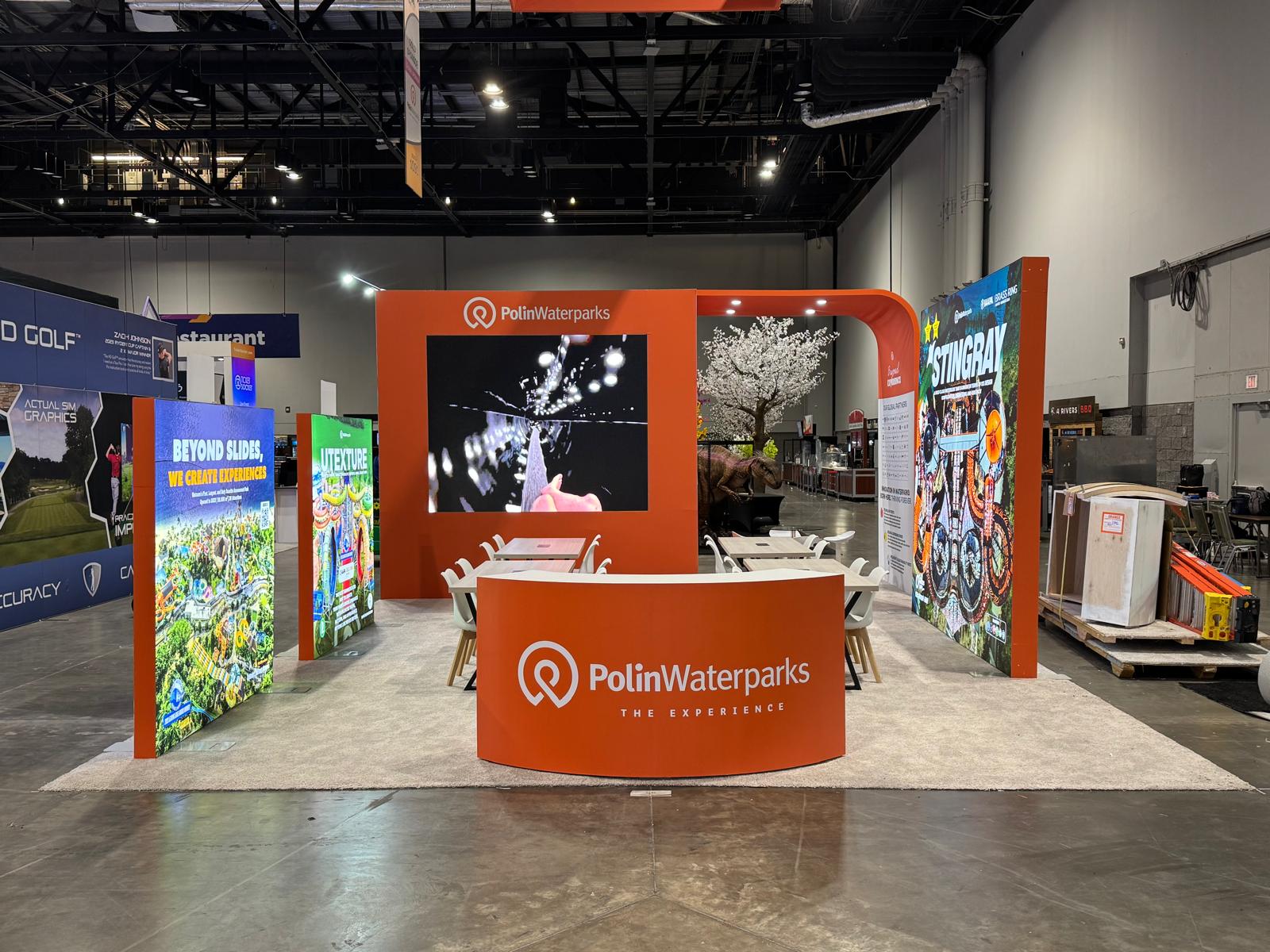
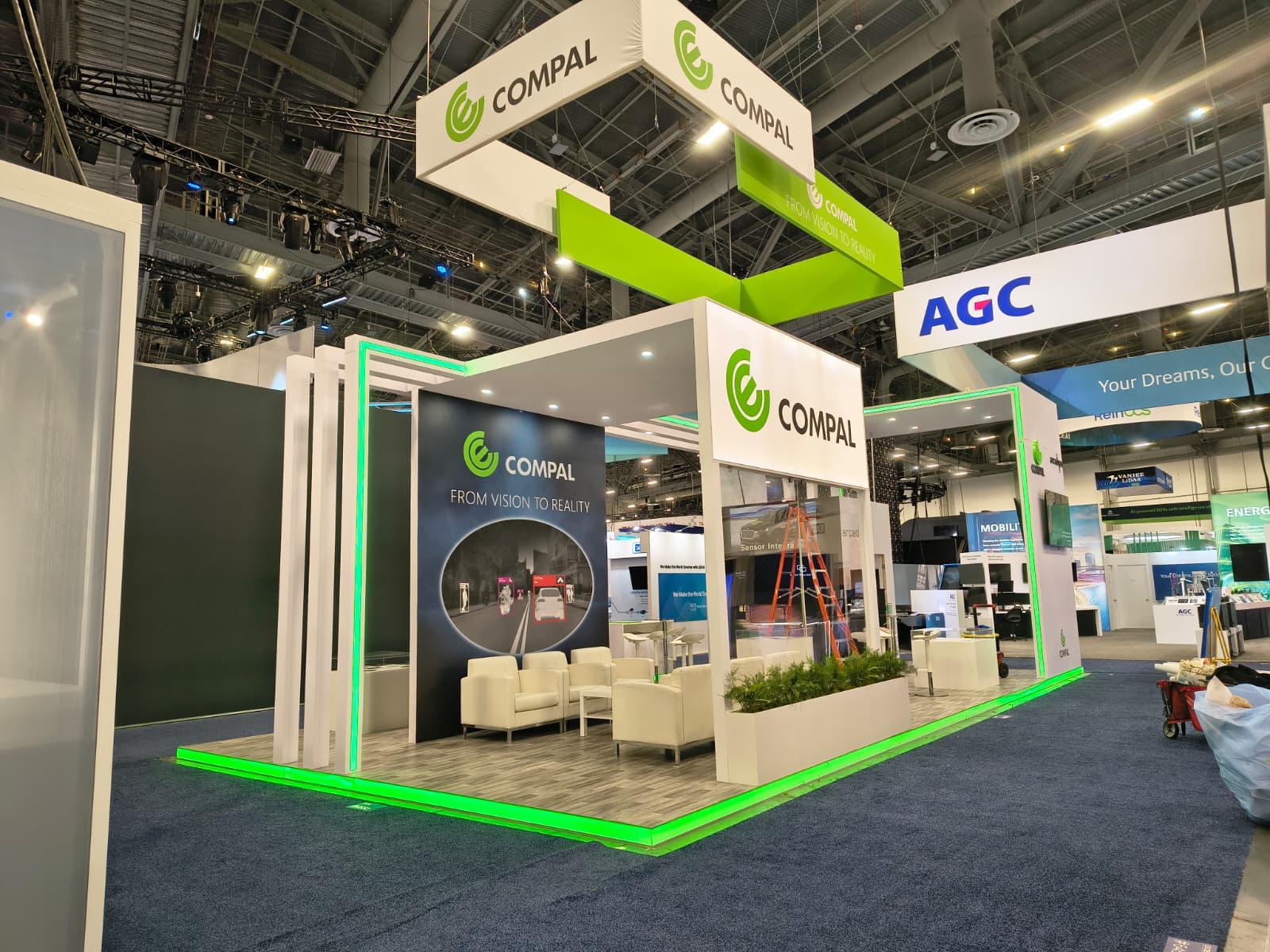
Shows weplanned end to end


How it works
Brief to boothin four moves
One project lead from first call to final crate. No hand-offs between a design agency, a fabricator and an I&D crew.
- Week 001
Brief
A 30-minute call about goals, footprint, budget and show rules. We read the exhibitor manual so you don’t have to.
- Days 5–702
Concept & 3D
Photoreal renders of your booth on the actual floor plan, with a line-item estimate. Revise until it’s right.
- Weeks 3–1003
Engineer & Build
Shop drawings, fabrication, graphics and AV. Critical parts are pre-assembled in our workshop before anything ships.
- Show week04
Install & Support
Our crew installs, a project lead stays on-site through opening, and we dismantle, repack and store after close.
Questions
Good toknow
Six months is comfortable for a custom booth, and four is workable. The hard limits are not design time but the show’s own deadlines: discount service orders, the advance-warehouse cut-off and graphics production.
Related